Consumer · Home
New York Is Gassing Its Rats by the Block. Thousands of Americans Found a $49 Fix They Just Plug In at Home.
As the city rolls out a $3,000 carbon-monoxide "rat-killing machine," a very different weapon is quietly selling out online — a plug-in device that uses AI-shifted ultrasonic frequencies to drive rodents and roaches out in 72 hours. No poison. No traps. No bodies.
The city's headline-grabbing "rat machine" treats sidewalks and parks. But the real rodent battle is being fought inside homes — and thousands of households say they've finally found something that works.
Oct. 20, 2026, 7:15 AM EDT / Source:The Urban Ledger

Marissa Caldwell
Consumer Affairs Reporter

On a single block of East 86th Street this fall, a two-person crew wheeled a $3,000 machine from tree pit to tree pit and pumped carbon monoxide straight into the ground. The city calls it a breakthrough. Council members have called the results near-total. One operator told reporters he adds a wisp of vegetable-oil smoke just to watch where the gas travels underground.
It is, by any measure, an extraordinary thing for a modern city to be doing in 2026. And it tells you everything about how bad the problem has gotten.
Up to 3 million
The estimated rat population of New York City. One national pest-control firm ranked the city No. 1 for rodents in its 2026 report. Rodent sightings fell about 22% this year — and officials still describe the fight as far from over.
Here is the part no one at that press conference said out loud: you cannot call the city to gas your apartment. The machine treats sidewalks and parks. The rats in your walls, the roaches behind your stove, the droppings on the pantry shelf at 6 a.m. — that war is being fought by ordinary people, alone, with whatever they can buy.
And for decades, what they could buy barely worked.
Why the old weapons keep losing
Snap traps catch one rodent and terrify the rest into hiding. Glue boards are slow and, frankly, grim. Poison is the worst bargain of all: it kills on a delay, which means the animal crawls into a wall cavity to die — and now you have a smell you can't reach and can't remove.
Worse, the poison is starting to fail on its own. In June, researchers at Rutgers reported that a large share of the rats and mice they collected across the Northeast — including New York — already carry a genetic mutation that blunts the most common rodenticides. The animals are, quite literally, evolving past our best chemicals.
"We were throwing money at the wall. Traps, bait, an exterminator twice a year. The scratching always came back."
Then there are the cheap ultrasonic plug-ins that have sold on the internet for years. Most of them share one fatal flaw: they emit a single, constant tone. Rodents have sharp hearing and short memories for danger — within days they learn the sound is harmless background noise and walk right past it. Independent reviewers have panned the category for exactly this reason.
Which is why a different device has started showing up in households that have tried everything else.
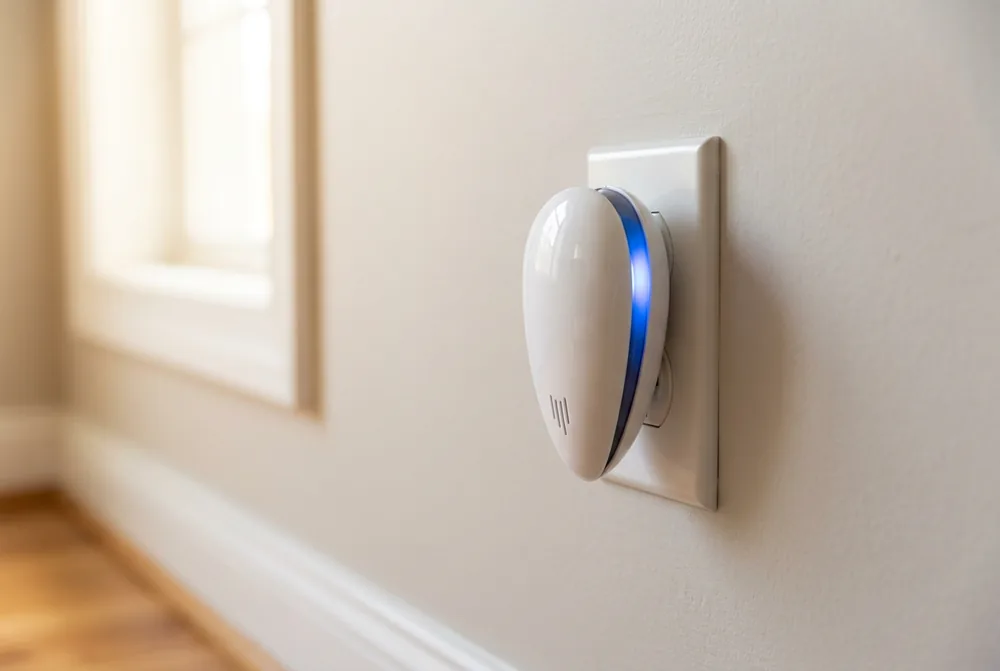
The part that's actually new: the frequency never stays still
The device is called Repellio, and the claim behind it is simple enough to explain in a sentence. Instead of a single tone, it emits triple-frequency ultrasonic waves, and an onboard AI algorithm constantly varies the pattern — so pests never get the chance to adapt to it.
That one design choice is the whole game. A constant sound becomes furniture. A sound that shifts, unpredictably, every few moments stays a threat. The maker describes the effect on a rodent's nervous system as a kind of relentless, inescapable unease — the environment simply becomes a place they refuse to stay in.
The frequencies sit above the range of human hearing, and the company says they're inaudible to dogs and cats as well. There are no chemicals, no pellets, nothing to mix or spray.
And crucially — this is the detail people seem to care about most — the pests leave. They don't die in your walls. According to the company, rats clear out first, usually within 72 hours, followed by cockroaches and spiders. No carcasses, no smell, no cleanup.
The Urban Ledger field test
We plugged one in for two weeks. Here's what happened.
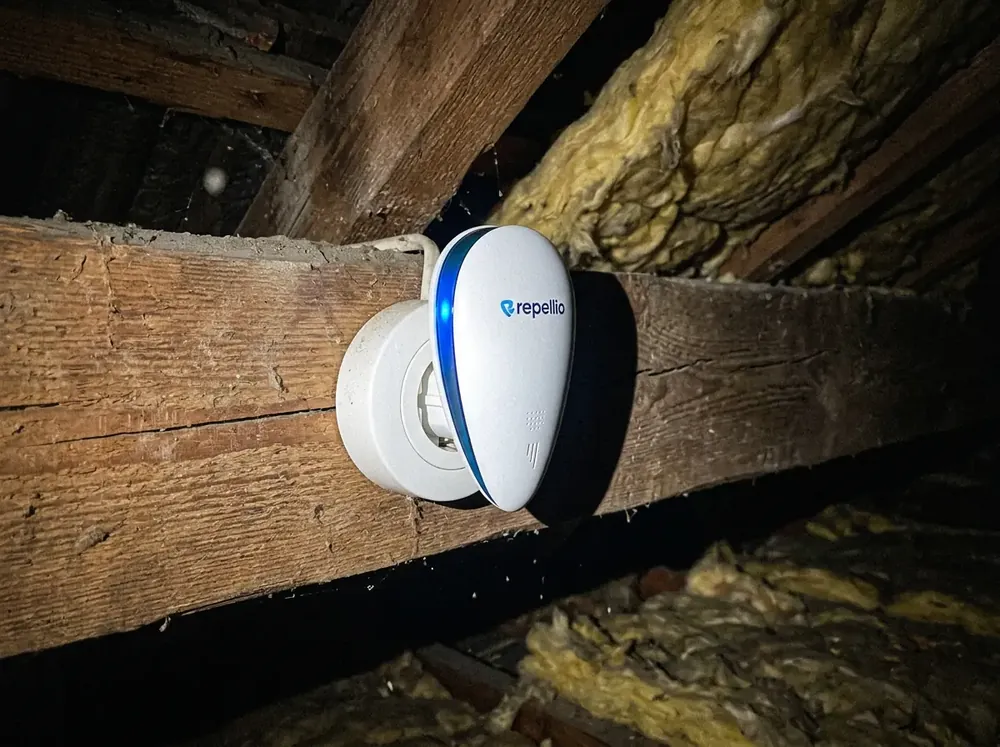
We ran a single unit in the attic above a ground-floor bedroom — a space with documented mouse activity, droppings along the joists and the telltale scratching after dark. We left traps unset as a control and checked a tray of seed each morning.
Days 1–3: No obvious change. The company says this is normal, and tells buyers to give it up to ten days. We kept going.
Day 4: The night noises moved — fainter, and further from the unit. The seed tray was, for the first time, untouched.
Day 9 onward: Silence overhead. No fresh droppings along the joists. When we unplugged it for 48 hours as a test, the faint scratching crept back — and stopped again once we plugged it back in.
Our take: one unit handles one room. If a problem spans a kitchen, a basement and an attic, you need one in each — the rodents just relocate to the untreated room otherwise. Bought as a multi-pack, it's still a fraction of a single exterminator visit.
What we liked
- No poison, no traps, no dead animals to find
- Silent to people; maker says safe around pets & kids
- Plug in and forget — no maintenance, no refills
- Shifting AI frequency, so pests don't tune it out
- 30-day money-back guarantee removes the risk
Worth knowing
- Not instant — give it up to 7–10 days
- One unit covers one room, not a whole house
- Ultrasound doesn't pass through walls; treat each space
- High demand means stock sells out in waves
What other households are reporting
Danielle R., Queens, NY

"Pre-war building, so rats come with the zip code. I'd given up — set traps, called the super, nothing stuck. Plugged one in the kitchen and one by the closet. By the second week the scratching in the wall just... stopped. I actually stood there listening for it."
Marcus T., Philadelphia, PA

"The roaches by the dishwasher were the final straw — we have a toddler and I didn't want spray on the floor. Three units, one per level. Haven't seen one in over a month. No smell, no bodies, nothing to clean up. That's the whole reason I'd recommend it."
Elaine F., Newark, NJ

"I was the skeptic. I've bought those cheap plug-ins before and they did nothing. This one is different — my husband swears the mice in the garage are finally gone. I'll take it. For fifty bucks and a money-back guarantee, there was no reason not to try."
CHECK CURRENT AVAILABILITY & PRICE
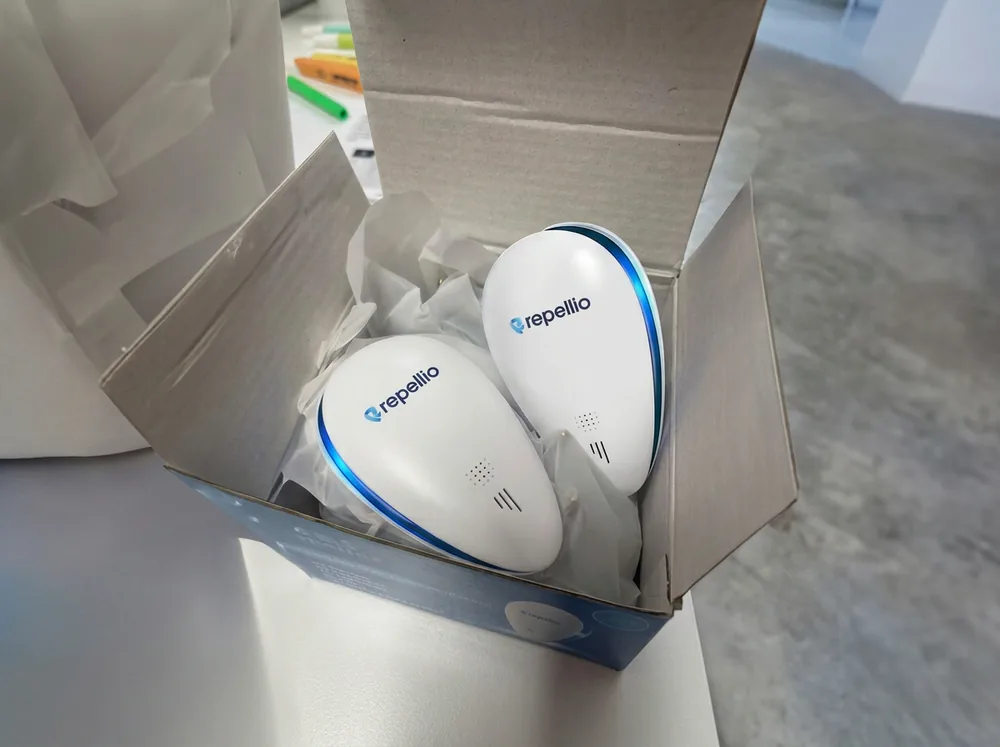
Limited-time manufacturer offer
Repellio™ AI Ultrasonic Pest Repeller
★★★★★
4.7 average from 1,000+ verified buyers
Important: 1 unit = 1 room
Ultrasound doesn't pass through walls, so a single device protects one room only. For a home, the maker recommends the 3-pack — one for the kitchen, one for the pantry, and one for the living room: the three spots where rodents gather and feed most. With a single unit, the pests simply move to the untreated rooms.
$49.95 $79.90
Save $30 — 37% off · The 3-pack is the most popular choice
Covered by a 30-day "Pest-Free" money-back guarantee. If it doesn't work, you get a full refund — no forms, no restocking fee.
A quick, honest caveat, because readers always ask: ultrasonic pest control is a category with a mixed scientific track record, and most of the evidence for Repellio comes from the manufacturer and from buyers rather than from independent labs. The shifting-frequency design is a genuinely sensible answer to why cheap plug-ins fail — but if you're on the fence, the real safety net here is the 30-day refund. It's what let us test it without feeling foolish, and it's what lets you.
What's not in question is the demand. Between New York's headline-making rat fight and a rough season for pests nationwide, these have been moving fast, and the discount pricing comes and goes with stock.
Questions people ask before buying
Does it really work on rats and mice?
That's its primary target. The maker says rodents are the first to leave — typically within 72 hours — because the shifting ultrasonic pattern makes a space unbearable for them. Give it up to ten days for a stubborn infestation.
What about roaches and spiders?
Those go next, after the rodents, according to the company — the same shifting ultrasonic pattern that drives out mice is meant to make a space unlivable for roaches and spiders too.
Is it safe around pets and children?
The maker states the frequencies are inaudible and harmless to humans, dogs and cats, and that there are no chemicals involved. As with any device, keep it plugged into a standard wall outlet as directed.
How many do I need?
One per affected room. Ultrasound doesn't travel through walls, so a single unit won't cover a whole house — that's why most buyers choose the multi-room bundle.
What if it doesn't work for me?
There's a 30-day money-back guarantee. If you're not satisfied, you return it for a full refund. That's the reason it's a low-risk thing to try.
PLUG IT IN. FORGET IT EXISTS.
Marissa Caldwell
Marissa Caldwell is a consumer affairs reporter at The Urban Ledger.